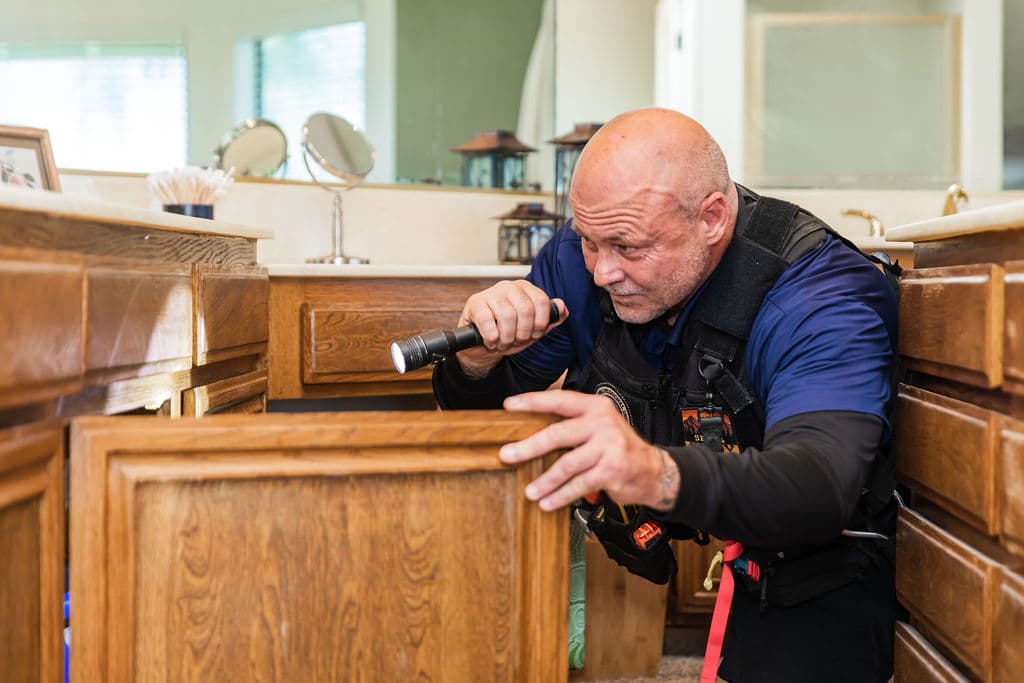

Older homes in Orange County tend to turn up the same handful of findings. Here are seven we see often, why each one matters when you sell, and whether to fix it or disclose it.
- ▸Fix safety and water-intrusion items first, plus anything a lender or insurer is likely to flag
- ▸Leave cosmetic choices like paint, flooring and fixtures to the buyer
- ▸Hidden systems, the sewer lateral and older supply pipe, are where sellers get surprised
- ▸Termite and wood decay findings come in a separate report, so read it next to the home report
- ▸If you will not fix something, work with your agent on how to disclose it and have documentation ready
- ▸A pre-listing inspection shows you these items before a buyer's inspector does
What repairs should I make before selling an older home in Orange County?
Before selling an older Orange County home, fix the items that affect safety, the items that let water in, and anything a buyer's lender or insurer is likely to flag. Leave cosmetic choices, like paint colors, flooring and light fixtures, to the buyer. Everything else is a judgment call between repairing it now and disclosing it with a clear explanation.
The hard part is knowing what is actually there. Most of the findings below are hidden, slow, or easy to live with for years, so owners often do not know about them until a buyer's inspector writes them up during escrow. These seven come up often in older homes across Orange County, from Orange, Anaheim and Tustin to the earlier neighborhoods of Irvine and Costa Mesa. None of them is rare, and none of them has to sink a sale if you know about it first.
1. Older supply plumbing
Many older homes still carry original galvanized steel water pipe, or a partial repipe that left galvanized runs in the walls. Galvanized pipe corrodes from the inside, so low pressure, rusty water and leaks at threaded joints are the usual signs. Buyers worry about it because a full repipe is one of the larger repair items in a house. We cover the details in galvanized plumbing in older Orange County homes.
Fix or disclose: if you already repiped, find the invoice and any permit. That paperwork answers the question outright. If the house is still galvanized and working, disclosing it and pricing it in is often reasonable. Active leaks should be repaired.
2. The sewer lateral
The line that carries waste from the house to the street is buried and invisible during a normal walkthrough. In older homes it is often clay or cast iron. Clay joints let tree roots in, and cast iron can corrode and scale. A buyer who orders a sewer scope will see roots, cracks, offsets or standing water on video, and that video tends to drive a hard negotiation.
Fix or disclose: scope it before you list. Roots that only need clearing are usually a modest fix. A broken or collapsed section is a bigger decision, and having your own video and a plumber's quote in hand gives you control of that conversation.
3. Older electrical panels and ungrounded circuits
Older homes often have original panels, two-prong ungrounded outlets, or newer three-prong outlets installed on circuits with no ground. Some older panel types draw attention from inspectors and insurers. A buyer's inspector will write these up as safety items, and they read worse on the buyer's report than on your own. We also find amateur wiring in garages and additions: open splices, missing covers, extension-cord runs.
Fix or disclose: fix the obvious safety items, like missing cover plates, open junction boxes, and three-prong outlets that are not grounded or GFCI protected. Panel replacement is a larger job. If a licensed electrician says it is needed, decide whether to do it or credit it, because a buyer's insurer may raise it anyway.
4. Roof, flashing and drainage
Southern California sun is hard on roofing. We see worn shingles, cracked or slipped tile, tile that looks fine from the street while the underlayment beneath it is near the end of its life, which a visual inspection can only partly see, and tired flashing at chimneys, skylights and wall joints. Gutters that empty against the foundation and soil sloped toward the house add to the water problem. On homes with a masonry chimney, a chimney inspection is worth adding, since cracks and crown damage are hard to judge from the ground.
Fix or disclose: active leaks, missing flashing and drainage pointed at the house are water-intrusion items, and those belong on the fix list. An old roof that is not leaking can be disclosed with its age. A roofer's written assessment helps either way.
5. Drywood termites and wood decay
Drywood termites are common in Southern California, and older homes have had more years of exposure. We also find wood decay at fascia, eaves, window sills, and around old plumbing leaks. These items show up in the termite, or wood-destroying organism, report rather than the home inspection report. At Trident that report is done in house through Trident Pest Control, our own registered company, on the same visit when you book it that way. Some inspection companies hand the termite work to an outside referral. At Trident, both reports come from our own team, so the plumbing leak in the home report and the rot under it in the termite report are read together.
Fix or disclose: termite reports sort findings into Section 1 and Section 2, and who pays for which is a matter of contract and local custom, not a fixed rule. Talk it through with your agent. Our sister post on Section 1 vs. Section 2 termite findings explains the difference. If treatment is needed, it is done by a separate licensed vendor. Trident does not fumigate.
6. Water heater strapping and venting
California requires water heaters to be braced or strapped against earthquake movement, and sellers are typically asked to confirm it in writing. Your agent can tell you which form applies. Many older installs have one strap, the wrong strap, or none. We also see vent connectors that are loose or pitched the wrong way, missing pressure relief discharge lines, and gas heaters in spaces with poor combustion air.
Fix or disclose: fix it. Strapping and venting corrections are usually modest repairs, and the water heater is a common question in the disclosure paperwork. This is an easy item to take off a buyer's list.
7. Unpermitted additions and garage conversions
Over decades, plenty of Orange County homes have picked up a converted garage, an enclosed patio, or a back-room addition built without permits. We often spot it from the work itself: framing, wiring or plumbing that does not match the rest of the house, low ceilings, or a garage with no way to park a car. Buyers care because unpermitted space may not be counted the same way in an appraisal or listing, and it may need to be legalized or removed later. Your agent can explain how it affects your sale.
Fix or disclose: this one is mostly a disclosure question, and it can carry legal weight. Pull the permit history from your city, tell your agent what you know, and let your agent and, if needed, an attorney guide how it is disclosed. Fix any safety problems the inspection finds in that space.
How to use this list
- Find out first. A pre-listing inspection shows you these items before a buyer's inspector does.
- Sort the findings. Safety and water intrusion go to the top. Cosmetic items go to the bottom or off the list.
- Decide fix or credit. Our post on fixing it now or crediting it later walks through that choice.
- Book it together. Home, termite and sewer scope can be done on the same visit. See one visit, two reports.
Disclosure duties, contingency periods and who pays for what depend on California law, your purchase contract and what you negotiate. Your real estate agent is the right person for those questions. Our job is to tell you what is in the house.
Many escrow surprises come from items on this list. If you want to see how one plays out, read what buyers' inspectors find that sellers didn't know. If you are getting ready to sell in Orange County, start with a pre-listing inspection. You can book online or call (949) 294-1188.
Not working with an agent yet? Start with the inspection, so you know the condition of the house before you talk with anyone about price. When you are ready, Trident can introduce you to experienced local listing agents we work with. Book a pre-listing inspection or call (949) 294-1188.