
Galvanized steel water pipe fails from the inside out, so a house can look fine and still be near the end of its plumbing. Here is how to spot it, what a home inspection can and cannot tell you, and why the termite report belongs in the same conversation.
- ▸Galvanized steel pipe corrodes from the inside, so the outside rarely tells you its condition
- ▸Low water pressure, rusty or discolored water, and leaks at threaded joints are the usual signs
- ▸A home inspection documents the pipe it can see and tests how the system performs
- ▸Pipe hidden in walls, under slabs, and underground cannot be seen in a visual inspection
- ▸Old supply leaks often show up again in the termite report as wood decay or a conducive condition
- ▸Home, termite and sewer can all be inspected on one visit, so the findings are read together
If you are buying an older home in Orange County and the listing does not mention a repipe, it is worth asking one question early: what is the water supply pipe made of? In many older homes the answer is galvanized steel, and galvanized pipe is one of the few major systems in a house that can look acceptable from the outside while being close to the end of its life on the inside.
Here is what galvanized plumbing is, how it fails, what a home inspection can and cannot tell you about it, and how to use the findings during your contingency period.
What galvanized plumbing is
Galvanized pipe is steel pipe coated in zinc to slow down rust. For much of the twentieth century it was a standard material for household water supply lines, before copper, and later PEX, took over. It is gray, joined with threaded fittings, and heavier than copper. A magnet will stick to it, and a scratch with a key shows a dull silver surface rather than copper's reddish color.
The zinc coating does not last forever. As it wears away, the steel underneath corrodes, and rust and mineral scale build up on the inside walls of the pipe. Over decades that buildup narrows the opening, the pipe wall thins, and the threaded joints, where the pipe is thinnest, become the usual place for leaks to start.
Why it matters in older Orange County homes
Orange County has a large stock of mid-century and older homes, and plenty of them have been partly updated over the years. That is the pattern that catches buyers out: a remodeled kitchen and new bathroom fixtures sitting on original galvanized supply lines, or a partial repipe that replaced the easy-to-reach runs and left galvanized pipe in the walls or under the house.
Our inspectors see original galvanized supply piping in older neighborhoods across the county, such as the historic districts in the City of Orange and Santa Ana. A newer-looking house is not proof either way. The only reliable answer is to look at the pipe itself and ask for the paperwork on any repipe.
Signs a house may still have galvanized pipe
- Low water pressure, especially on the hot side or at fixtures farthest from the main line, and pressure that drops when two fixtures run at once.
- Rusty, brown or discolored water, most noticeable when a tap is first opened after sitting.
- Gray threaded pipe visible at the water heater, under sinks, at the main shutoff, in the garage, or in the crawl space.
- Mixed materials, such as copper spliced into galvanized lines. Where two different metals meet without the right fitting, corrosion at that joint tends to speed up.
- Evidence of past leaks: stains on ceilings and walls, patched drywall below bathrooms, or warped flooring and cabinet bases.
Short galvanized nipples at the water heater are common even in houses that were otherwise repiped, so one or two gray fittings there do not mean the whole house is galvanized. It is the pattern across the house that matters.
What a home inspection can and cannot tell you
A home inspection is visual and non-invasive. We document the supply pipe we can see: at the water heater, under sinks, at the main shutoff, in accessible crawl spaces and attics, and in the garage. We identify the material, note corrosion, active leaks, and mixed-metal connections, and run the fixtures to see how the system actually performs, including pressure and flow with more than one fixture open.
What it cannot do is see inside finished walls, under a slab, or underground, and it cannot measure how much scale is inside a pipe that looks fine from the outside. If the visible pipe is galvanized and the flow is poor, the report will say so and recommend that a licensed plumber evaluate the system. That evaluation, and any repipe quote, should happen inside your contingency period so you can use it.
Ask the seller for anything on record: repipe invoices, permits, and plumber reports. A documented whole-house repipe answers the question outright. A partial repipe tells you which runs are still original.
Why the termite report belongs in the same conversation
Old supply lines rarely fail all at once. They seep at a joint inside a wall or under a floor for months, and moisture is what wood-destroying fungi need. That is why a slow galvanized leak often appears twice: as a stain or a corroded fitting in the home inspection, and as wood decay or a moisture-related conducive condition in the termite report.
Read separately, those are two findings in two reports. Read together, they tell you where the water has been going and how long it has been going there. At Trident, the termite and wood-destroying organism inspection is done in-house through Trident Pest Control, our own licensed company, and can be done on the same visit as the home inspection. That means one team sees the plumbing and the wood, and one company answers your questions about both.
Don't forget the drain side
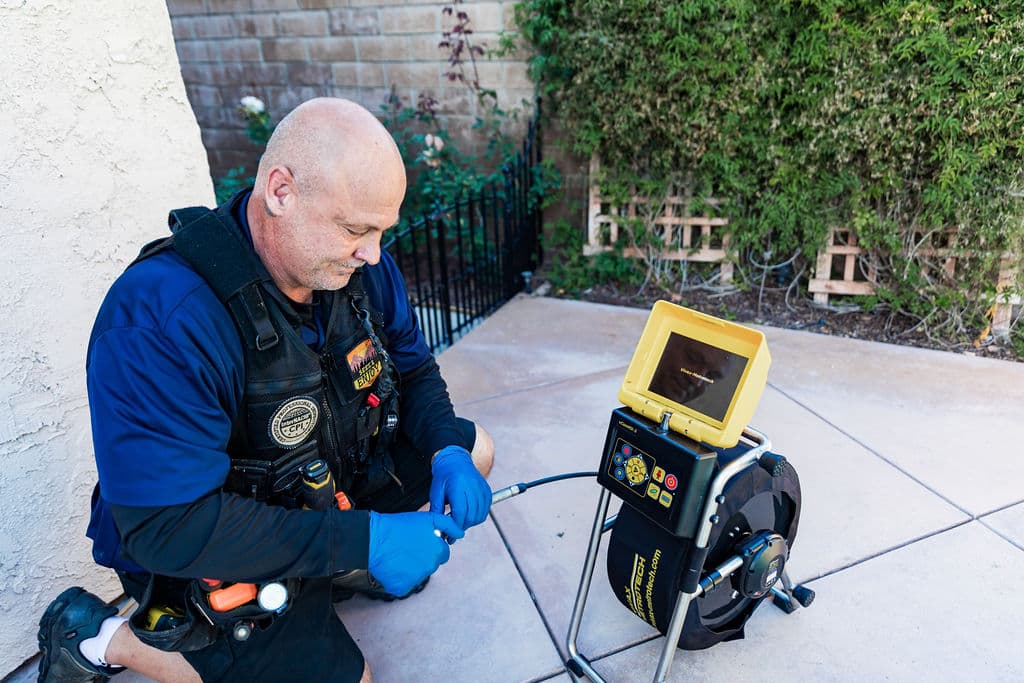
Galvanized supply lines bring water in. The line that carries waste out to the street is a separate system, buried and invisible to a standard inspection, and in an older home it is often just as old as the supply piping. A sewer scope sends a camera through that line and records what it finds. It can be added to the same visit as the home and termite inspections. For more on the buyer's side of that decision, see sewer scope before buying a home in Orange County.
What to do with galvanized findings
- Get a plumber's evaluation and quote during your contingency period, not after it.
- Look at the termite report alongside it. Wood decay near bathrooms, kitchens or the water heater is often the same story as the plumbing.
- Talk to your agent about a repair request or credit, or factor the repipe into your offer.
- Ask your insurance agent early whether the plumbing type or age affects your policy, so it doesn't come up in the last week of escrow.
Buying an older home in Orange County? Book the home inspection, the termite inspection and a sewer scope on one visit, and read the findings together. Schedule your inspection or learn why we do termite inspections in-house.