
Some repairs are worth doing before you list and some are better handled as a credit at closing. Here is the framework our inspectors walk Orange County sellers through, item by item.
- ▸Neither fixing nor crediting wins every time. Decide item by item, not for the whole house at once
- ▸Safety items and anything a lender may require are usually better fixed before you list
- ▸Buyers tend to overestimate items they cannot see clearly, so a written quote in hand can narrow the ask
- ▸Loan programs limit how large a seller credit can be, so a big credit does not always fit the deal
- ▸Who pays for termite Section 1 work is a matter of contract and custom, so talk it through with your agent
- ▸A pre-listing inspection gives you the list early, while you still have time to choose
Is it better to give a buyer a credit or do repairs before closing?
It depends on the item, not the house. Do the repair yourself, ideally before you list and at least before closing, when it is a safety issue, something a lender is likely to require, or something a buyer will price far higher than it really costs. Offer a credit when the work needs permits or time you do not have, when the buyer will want to choose the contractor anyway, or when the item is minor and easy to price.
The sellers who do well with this are the ones who decide early, with a written list in front of them, instead of in the middle of escrow with a deadline running. That is the whole reason to run the numbers before the sign goes up.
Start with a list you can trust
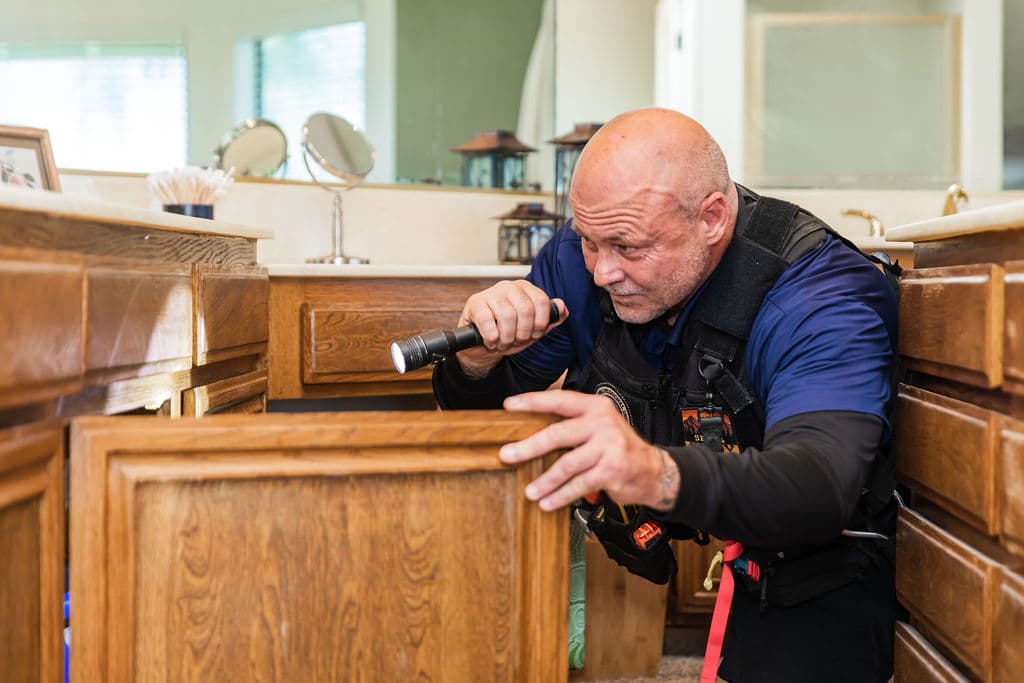
A pre-listing inspection gives you the same kind of report a buyer's inspector will produce, only weeks earlier and on your schedule. At Trident, every inspection is done by our own certified inspectors, all Trident employees, and our team is led by Certified Master Inspectors. The home inspection report is delivered the same day.
In California the termite report matters as much as the home report, because wood repairs often end up in the negotiation. Our termite and wood-destroying organism inspection is done in house through Trident Pest Control, our own company, registered with the California Structural Pest Control Board (Company Registration #PR8662). Home, termite and sewer scope can be done on the same visit, and the termite report follows with same-week turnaround for most properties.
Once you have the reports, sort every finding into one of the buckets below. In our experience, most reports produce a short fix list and a longer list of items that are fine to disclose and leave alone. Our post on how a pre-listing inspection shrinks the buyer's repair list goes deeper on that sorting.
Five questions to ask about each item
1. Is it a safety item, or something a lender may require?
Exposed wiring, a missing water heater strap, a gas leak, a broken handrail, an active roof leak. These are the items that make a buyer nervous about the whole house, and some loan types have appraisal standards that may require certain conditions to be corrected before the loan funds. Your agent and the buyer's lender can confirm what applies. If an item could hold up the loan, fixing it early removes a risk you cannot control later.
2. Will a buyer overestimate it?
This is where a credit can cost you more than the repair. A buyer who reads "GFCI outlet did not trip when tested" with no context often imagines the worst and asks for a number to match. Many items that read badly in a report are usually a modest fix: a loose toilet, a failed caulk line, a GFCI outlet, a missing downspout extension. Fixing those, or at least getting a written quote, takes the guesswork out of the conversation.
3. Does it need a permit?
Permitted work takes time to schedule, inspect and close out. If you start it late, you can end up listing with an open permit, which raises its own questions. For permit-heavy items such as an electrical panel replacement or a major plumbing change, a credit backed by a licensed contractor's written quote is often the cleaner path.
4. How much time do you have?
If you are listing in two weeks, a roof replacement is not happening. If you are listing in three months, it might. Be honest about contractor lead times. A repair rushed to beat a listing date can be worse than no repair, because a buyer's inspector will find the rushed work too.
5. Who controls the quality?
When you fix it, you choose the contractor and you keep the receipts, which you can hand to the buyer. When you credit it, the buyer chooses, and many buyers prefer that for big items they will live with for years. Neither is wrong. But if you make the repair, use licensed trades, keep the paperwork, and expect the buyer's inspector to look at the work closely.
Running the numbers without guessing
Running the numbers does not mean predicting what a buyer will ask for down to the dollar. It means comparing two things for each item that matters.
- Your real cost to fix it: a written quote from a licensed contractor, plus your time and any delay to the listing date.
- The buyer's likely ask: what a nervous buyer will request once their inspector writes it up, which is often padded for uncertainty and inconvenience.
- The gap between them: when the likely ask is much larger than the real cost, fixing it, or getting a written quote to share, often narrows the ask. Ask your agent how to handle it in your disclosures. When they are close, a credit is often simpler.
- The leftover risk: repairs that could uncover more work once walls or floors are opened. Those are often better left to the buyer with a fair credit, so the open-ended part is not on you.
Write it down as a simple table: item, fix cost, likely ask, decision. Share it with your agent before you list.
Why a credit is not always as simple as it looks
Credits have limits. Many loan programs cap how much a seller can contribute toward the buyer's costs, and the cap often depends on the loan type and the buyer's down payment. If you plan to offer a large credit for repairs, your agent and the buyer's lender need to confirm it fits, or it may have to become a price reduction instead.
Timing matters too. A credit that gets renegotiated late, after the buyer's lender or appraiser raises an issue, can stall a deal. We cover that in how inspection surprises kill deals in escrow.
Termite work: Section 1, Section 2, and who pays
California termite reports usually separate findings into Section 1 (active infestation or damage found) and Section 2 (conditions likely to lead to infestation or damage if left alone). Who pays for which is set by the purchase contract and local custom, and it is negotiable. Our sister site covers Section 1 vs. Section 2 findings and who pays for termite repairs in a California home sale, and your real estate agent can tell you what is typical for your contract and area.
Trident Pest Control inspects for termites and other wood-destroying organisms and writes the report. We do not fumigate. If treatment is needed, it is done by a separate licensed company, and you get our findings in writing so you can get quotes on the work.
Some inspection companies subcontract the termite inspection or hand it to a referral. At Trident, every inspection, home and termite, is done by our own team, so the two reports describe the same house in the same words.
A quick rule of thumb
- Fix before listing: safety items, likely lender requirements, cheap items that read badly in a report.
- Credit at closing: permit-heavy work, large items the buyer will want to control, anything that could open up more work.
- Disclose and leave: normal wear, cosmetic items, and things the buyer would likely change anyway.
None of this is legal or tax advice. Disclosure duties, contingency periods and credit terms depend on your contract, so run your list past your agent before you decide. For how this fits into the bigger picture, read why sellers who inspect first negotiate from strength.
Get the list before you decide
The earlier you have the report, the more of these choices stay yours. Start with a pre-listing inspection from our Orange office, serving Orange County from Irvine and Costa Mesa to South OC. Book online or call (949) 294-1188, and you will have the home report the same day.
Not working with an agent yet? Start with the inspection, so you know the condition of the house before you talk with anyone about price. When you are ready, Trident can introduce you to experienced local listing agents we work with. Book a pre-listing inspection or call (949) 294-1188.