On most 1950s and early 1960s Orange County homes, a missing weep screed is how the house was built, not a defect. The real question is whether water has been getting behind the stucco, and that takes more than a glance to answer.
- ▸A weep screed lets water that gets behind stucco drain out at the foundation line
- ▸Many 1950s and early 1960s Orange County homes were built before screeds were common
- ▸On those homes a missing screed is original construction, not automatically a defect
- ▸The finding is water damage: staining, efflorescence, blistering, cracking at the sill, a buried or rusted screed
- ▸Thermal imaging, moisture meters and probing at the mudsill tell an old stain from an active problem
- ▸For most sound older walls the answer is maintenance, not re-stuccoing the house
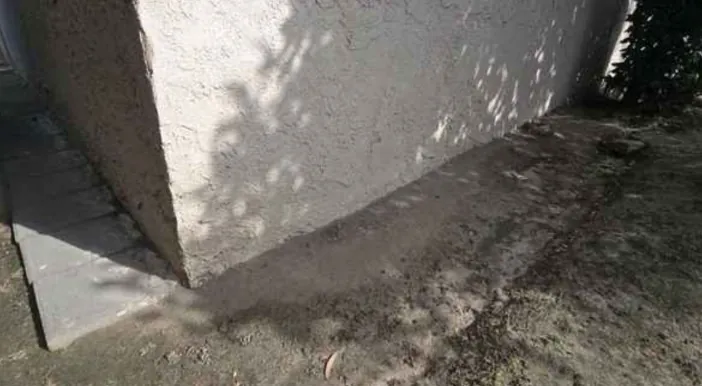
Walk around almost any 1950s or early 1960s tract home in Garden Grove, Anaheim, Orange or Santa Ana and you may notice something missing. The stucco runs straight down to the foundation, or even to the dirt, with no metal strip along the bottom of the wall.
That strip is a weep screed. On a newer home it is required. On an older home, its absence is usually how the house was built, not a defect. The real question for a buyer is whether water has been getting behind that stucco, and that takes more than a glance to answer.
We see these homes constantly, from Garden Grove and Anaheim to Orange and Mission Viejo, so we know what a sound 1960s wall looks like and what a wet one looks like. Here is how Trident evaluates it.
What a weep screed does
Stucco is not waterproof. Some rain and irrigation water always gets behind it. A weep screed is a perforated metal or plastic edge at the bottom of the wall that lets that water drain out at the foundation line instead of soaking into the framing.
Today's California Residential Code (section R703.7.2.1) calls for a corrosion-resistant screed of at least 0.019 inch (No. 26 gauge) at or below the foundation plate line, set at least 4 inches above soil and 2 inches above paving. Orange County cities such as Newport Beach check for it at lath inspection.
Why many older homes do not have one
In our inspections, weep screeds generally show up on homes built from the mid to late 1960s on, and the 1973 Uniform Building Code includes them (InspectAPedia quotes that edition). Much of central and north Orange County was built before that. On those homes, plasterers often lapped the stucco over the foundation or ran it into the soil.
So when our inspector finds no screed on a home built in 1961, we say so plainly in the report. From a recent Garden Grove inspection:
“The construction predates modern requirements for weep screed installation... The absence of a weep screed does not necessarily constitute a defect... Retrofitting a weep screed is not automatically necessary solely because one is absent from an older home.”
We also write down what we cannot see. Flashing, the weather barrier and the framing behind the stucco are hidden, so a missing screed tells you to look harder at everything else.
Original construction versus actual deterioration
The screed itself is not the finding. What we look for is evidence that water is staying in the wall:
- Soil, mulch or concrete against the stucco. Grade that has crept up over decades, planters built against the wall, or a patio poured right over the base. On a recent Yorba Linda termite inspection, the screed was buried under hardscape.
- Staining and efflorescence. White mineral deposits or dark tide lines along the bottom 12 to 24 inches of wall mean water is wicking up and drying out.
- Blistering, flaking or bulging stucco. The same Garden Grove home with no screed also had blistering and damaged stucco in other areas. That damage, not the missing screed, is what we flagged for repair.
- Cracking at the sill line. A horizontal crack where the stucco meets the foundation can mean movement or rusting lath. On an Anaheim inspection we found exactly this, along with efflorescence and bark mulch packed against a restricted screed.
- A screed that is there but failing. On an Orange home the screed was rusted, partly missing and covered by soil. Having a screed is no help when it cannot drain.
- Signs inside. Stained or swollen baseboards, musty odor, or peeling paint on the inside face of an exterior wall.
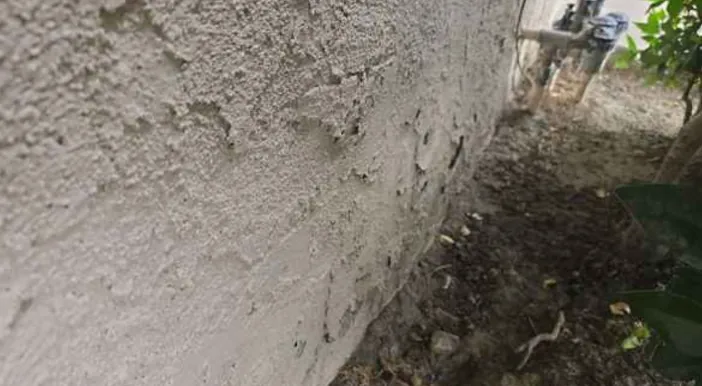
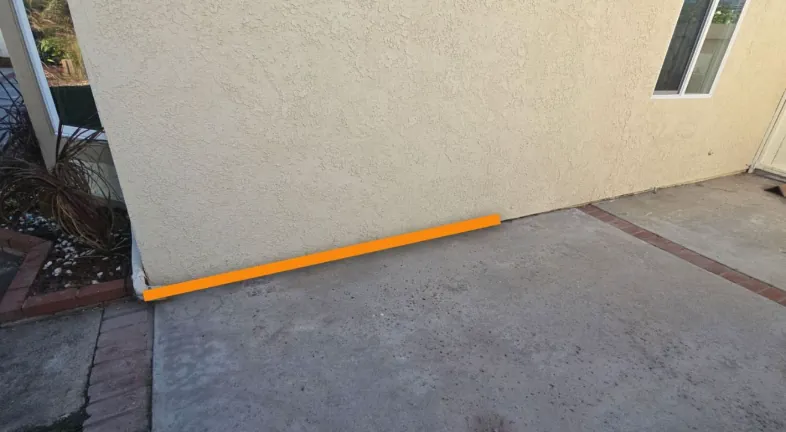
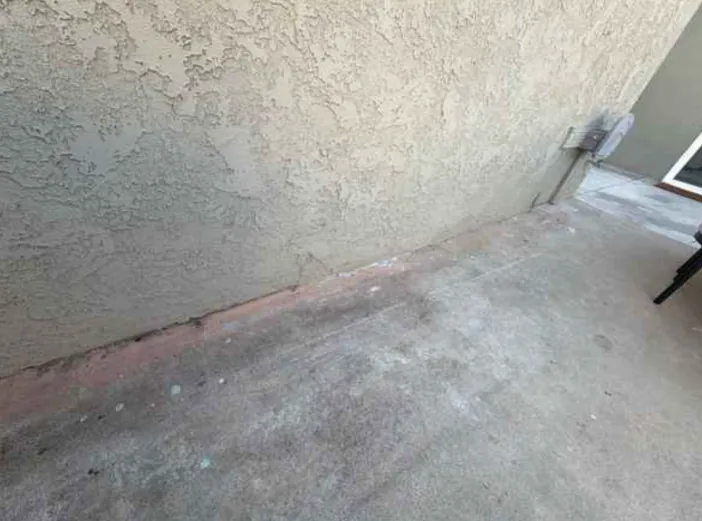
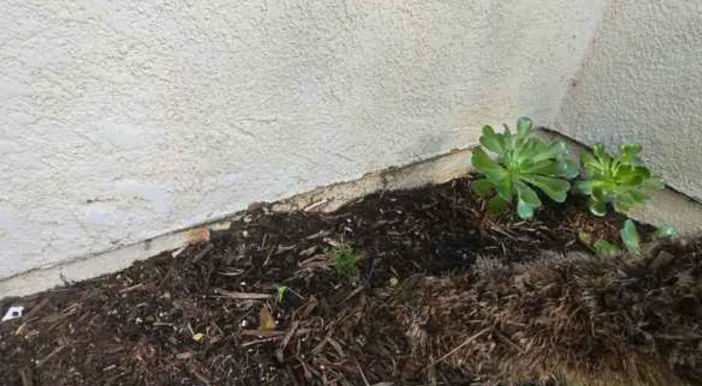
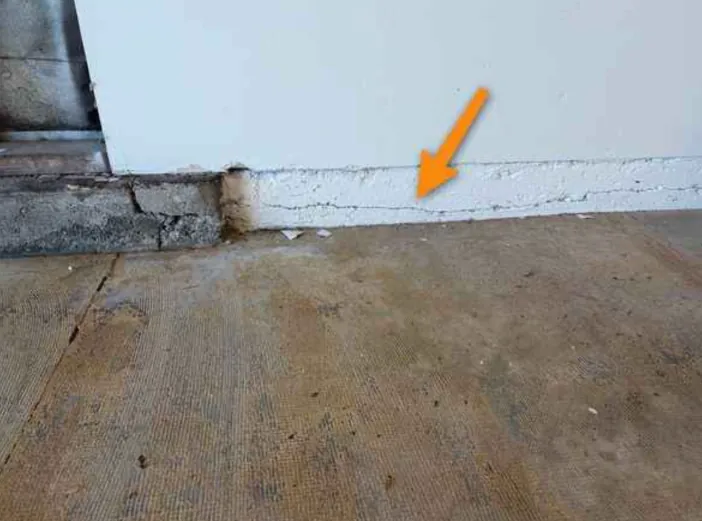
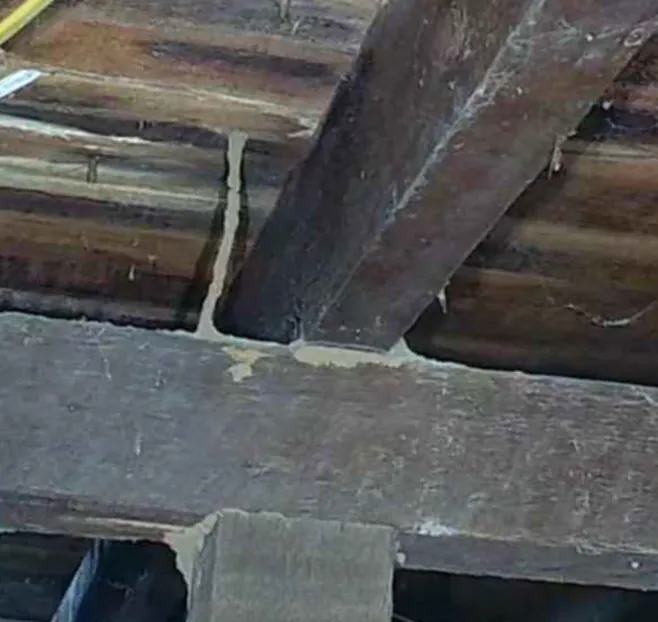
The Garden Grove house is a good example of why the whole report matters. The same home also had an older Pushmatic electrical panel that was past its useful life and undersized, which we cover in Zinsco, Federal Pacific and Pushmatic panels.
How we test what we cannot see
A visual check has limits, so Trident uses tools on suspect walls:
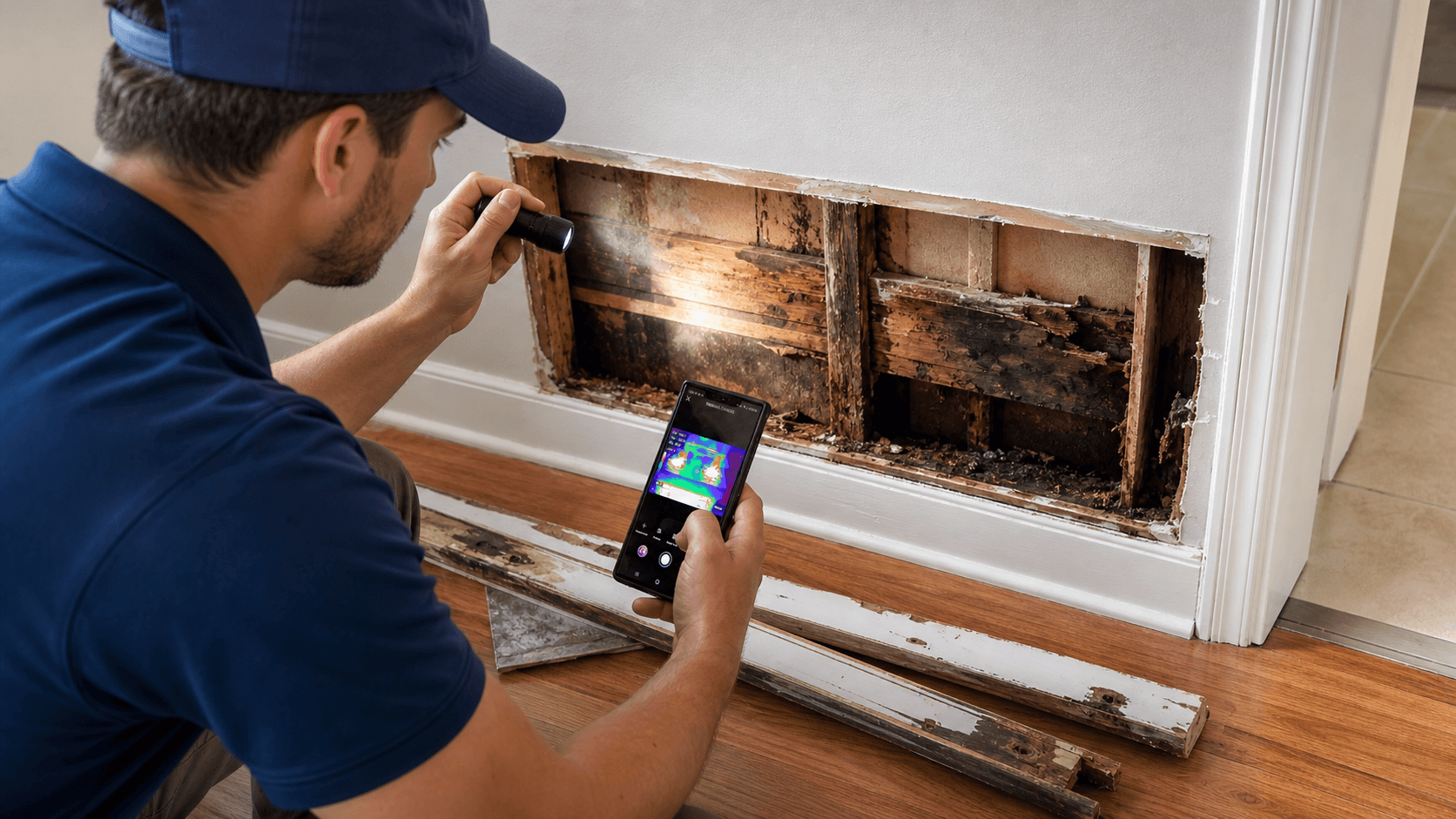
- Thermal imaging to spot cool, damp patterns along the base of walls and around windows.
- Moisture meters to confirm whether a suspect area is wet today or is an old, dry stain. On a recent inspection in Orange, the camera found a ceiling anomaly that the meter confirmed was wet, while a nearby older stain read dry. That distinction changes the repair conversation.
- Probing at the mudsill, where it is exposed in a crawlspace or garage. Because Trident Pest Control is licensed in Branch 3 for wood-destroying organisms, the same team that inspects the house can evaluate fungus and dry rot at the sill plate and write it up on the official termite report.
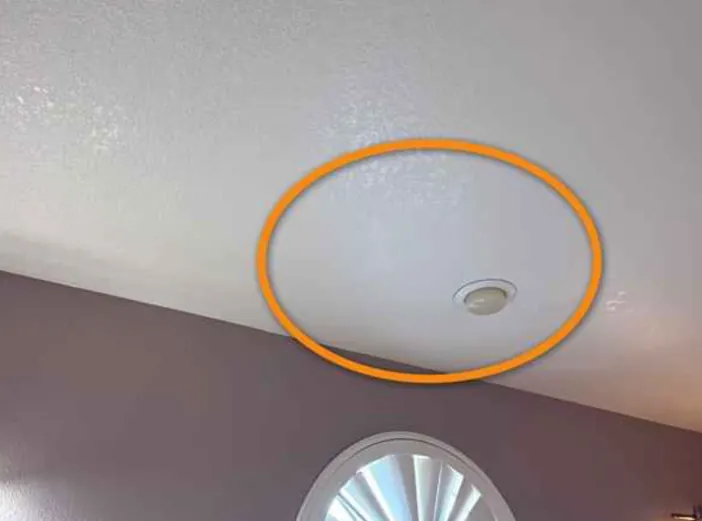
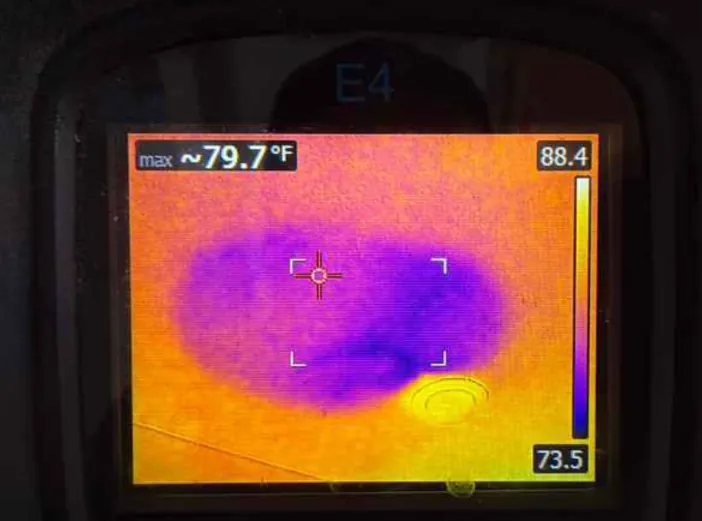
If moisture has been sitting in a wall long enough, the next question is often mold. Our mold and air-quality testing answers that with lab results, and how we write remediation protocols explains what happens when a wall does test positive.
What we recommend
For most older homes with no screed and no damage, the answer is maintenance, not demolition:
- Lower soil and mulch so it sits well below the base of the stucco. Keep paving off the wall where possible.
- Aim sprinklers away from the walls and fix leaks.
- Seal cracks and keep paint from bridging over drainage gaps.
- Watch the base of the wall for new staining, cracking or blistering.
Re-stuccoing a whole house to add a screed is rarely justified on its own. We generally advise against tearing off sound plaster just to retrofit one. When there is real damage, such as rot at the sill, active moisture or failing stucco, we recommend a stucco or waterproofing contractor open the wall, and our termite team can scope any wood repair.
The bottom line for buyers and agents
A missing weep screed on a 1950s or 1960s home is a fact about when it was built. Water damage behind that stucco is a finding. Trident's job is to tell the two apart, in plain language, with the evidence in the report.
Trident is a local, independent team that knows Southern California homes by the decade they were built. Because home inspection, termite (SPCB Branch 2 and 3), sewer and mold testing are all in house, one visit covers the stucco, the sill plate and the wood behind it. That means one schedule, one point of contact and no hand-offs between companies before your contingency deadline. To book, schedule online or call (949) 294-1188.
Sources: InspectAPedia: stucco weep screed specifications; City of Campbell: exterior lath and window flashing guide, citing CRC R703.7.2.1; City of Newport Beach: exterior lath checklist; Sika: stucco wall base deterioration at soil; JLC: A Close Look at Stucco.