The sewer line is one of the few major systems a buyer can't see and a standard home inspection can't reach. Here is when to book a scope during escrow, what to do with the findings, and how to get home, termite and sewer done on one visit.
- ▸A sewer scope is a camera inspection of the buried line from the house toward the street
- ▸Book it inside your inspection contingency, ideally on the same visit as the home inspection
- ▸The line from your house is usually the owner's to repair; confirm with your city or sewer district
- ▸Findings become repair requests, credits or price changes, but only while your contingency is open
- ▸A leaking sewer line adds moisture to the soil, which is a conducive condition for termites
- ▸At Trident, home, termite and sewer can be inspected on one visit
Should you get a sewer scope before buying a home in Orange County? For most resale homes, yes, and the time to do it is during your inspection contingency, on the same visit as your home inspection. The sewer line is buried, a standard home inspection cannot see it, and once you close, it is yours.
This post is about the buyer's side of that decision: when to book the scope, how to fit it into escrow, and what to do with what it finds. For a closer look at the defects themselves, from root intrusion to Orangeburg pipe, see our guide to why sewer scopes matter in Orange County.
What a sewer scope is
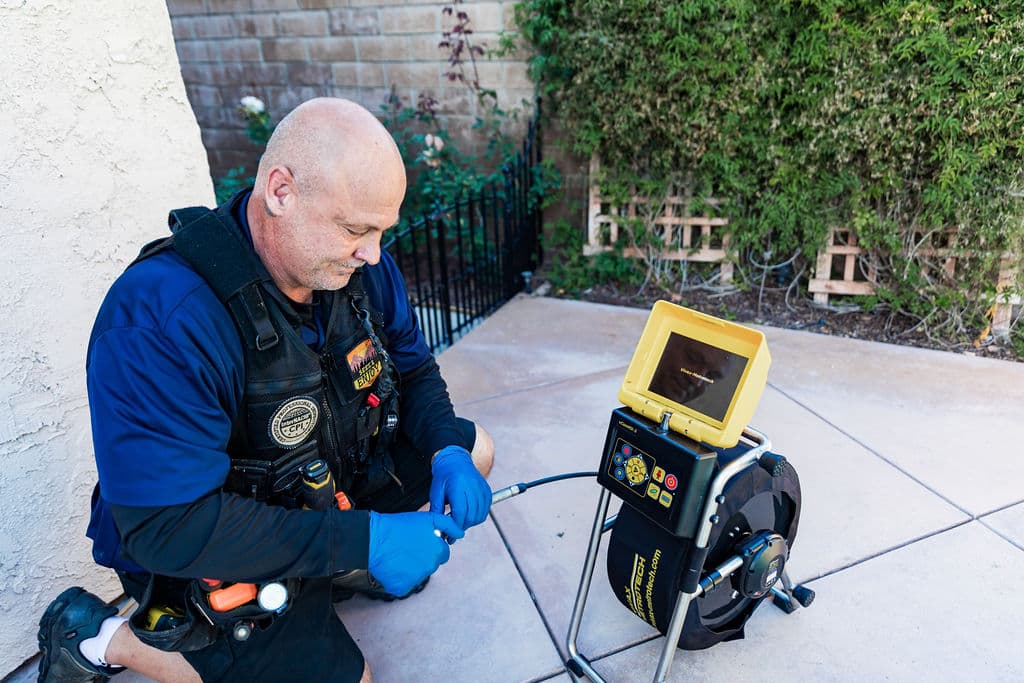
A sewer scope is a video inspection of the main sewer line, the buried pipe that carries everything from the house's drains out toward the public sewer. We run a flexible camera through the line from a cleanout, record the run, and note the condition, material and any defects along the way. The on-site portion typically takes 20 to 45 minutes.
A standard home inspection runs the drains and watches them empty, which tells you they are working today. It cannot tell you whether the pipe under the yard is cracked, full of roots, sagging, or separated at a joint. That is the gap a scope fills.
Why it matters when you're buying
In most places, the private line from the house toward the street is the property owner's responsibility to maintain and repair, not the city's. Exactly where your responsibility ends varies by city and sewer district, so ask yours. Either way, a problem found before closing is something you can negotiate. The same problem found after closing is a bill.
Sewer repairs are also the kind of expense that is hard to predict from the surface. A line under a driveway, patio or mature landscaping costs more to reach than one under open lawn, and some damaged lines can be lined in place while others have to be dug up. A plumber's quote based on the scope video is how you put a real number on it.
When to book it during escrow
Book the scope for the first days of your inspection contingency, and book it with the home inspection. Every separate appointment is a day you are not using to get quotes and negotiate. If the scope finds something, you want enough contingency left to get a plumber out, get a written quote, and have your agent present a request.
- Ask the listing agent where the cleanout is when you schedule. A clear, accessible cleanout makes the scope straightforward.
- Make sure the water is on at the property, because the line needs flow for a useful inspection.
- Book home, termite and sewer together so all three inspections can start on the same day.
- Leave room for a plumber's quote before your contingency deadline if anything is found.
One visit, three inspections. At Trident, the home inspection, the in-house termite and WDO inspection and a sewer scope can all be done on the same appointment. Your home inspection report arrives the same day.
Why the sewer and termite reports connect
A cracked or separated sewer line doesn't only back up. It can leak into the soil around the house, and damp soil near a foundation is exactly the kind of conducive condition a termite inspector looks for, because subterranean termites depend on moisture. A scope finding and a termite finding near the same side of the house are worth reading together.
That is easier when one company did both. Trident's termite and wood-destroying organism inspections are performed in-house through Trident Pest Control, our own company, under California Structural Pest Control Board License #PR8662. The same team that inspected the house and scoped the line is the team you call about either report.
What to do with the findings
The report rates each finding by severity so you know how to treat it. Light root intrusion is usually a maintenance item. A break, a significant sag where waste pools, or a separated joint usually calls for a plumber's evaluation and quote, and that quote becomes the basis for a request.
- Ask the seller to repair before closing, with a licensed plumber and documentation.
- Ask for a credit so you control the repair after closing.
- Adjust the price to reflect the cost, or decide the house isn't the right one.
Buying a condo or townhome? Shared sewer lines are often the association's responsibility rather than yours. Ask the HOA what it maintains before deciding whether a scope is worth it for your unit.
Buying in Orange County? Add a sewer scope and the termite inspection to your home inspection and book all three for one visit. Schedule your inspection.